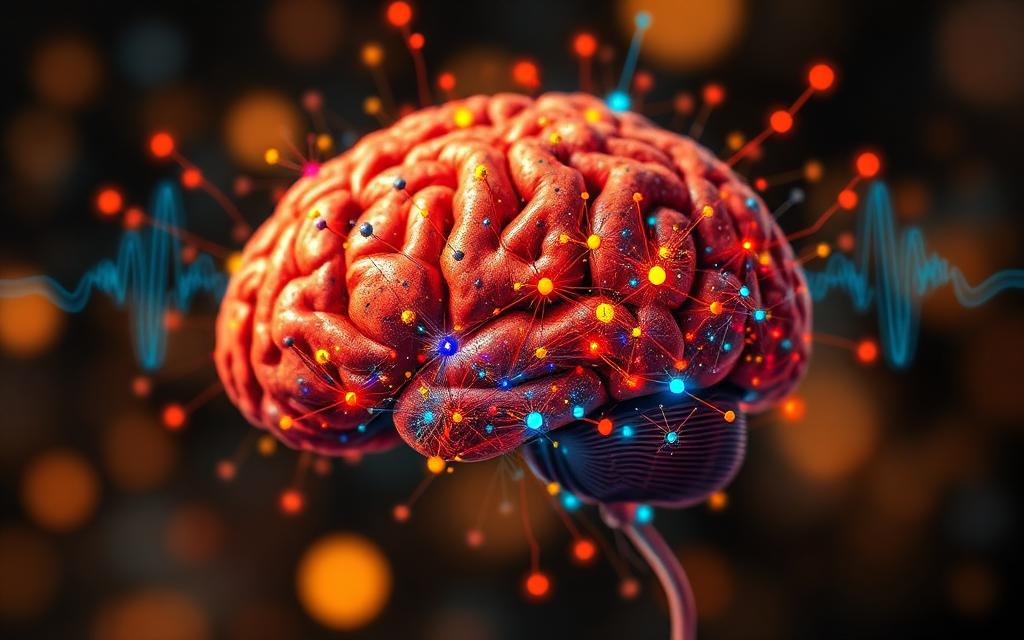
Evidence Over Euphoria
ADHD & Stress: The Dangerous Romanticization of a Neurobiological Disorder
In my daily work, the topic of ADHD comes up almost inflationary. It seems the diagnosis has become a modern lifestyle label. It's often sold as a "superpower"—an upgrade for creativity and speed.
I notice it in myself too: in a world full of push notifications, I'm easily distracted. But be careful—that's not ADHD. We need to differentiate between an environmentally caused concentration weakness and a clinically relevant disorder. When we glorify ADHD as a trendy feature, we ignore the evidence-based facts and the massive physiological toll that those affected pay.
The Neurobiological Reality: Not a Focus Problem, but a Regulation Problem
Scientifically speaking, ADHD (Attention Deficit Hyperactivity Disorder) is primarily an executive function disorder. Research, including that of renowned expert Dr. Russell Barkley, shows that it involves a delay in the development of self-regulation.
The cause lies in neurobiology:
Dopamine dysfunction: There is an imbalance in the neurotransmitter systems (dopamine and noradrenaline), particularly in the reward center (nucleus accumbens) and the prefrontal cortex.
Impaired stimulus filtering: The brain struggles with inhibition—the ability to suppress impulses and irrelevant stimuli.
The "Superpower" Myth and Stress Physiology
Why is ADHD often perceived as positive? Usually because of hyperfocus. But from a scientific perspective, this is not a controllable strength—it's a flow dysregulation.
The problem lies in the physiological cost:
Adrenergic stimulation: Since the brain is chemically unable to generate motivation for monotonous tasks, it uses stress as "substitute fuel." The task only gets done when the deadline is so close that the body massively releases adrenaline and cortisol. This isn't healthy working—it's a biochemical emergency mode.
Executive exhaustion: The constant compensation of symptoms (known as masking) leads to chronic overload of the nervous system. Those affected appear "super strong" on the outside but are internally heading toward clinical exhaustion.
Acceptance vs. Self-Protection: The Scientific Middle Ground
A central concept in modern therapy is Radical Acceptance (after Marsha Linehan). This means: I acknowledge that my "hardware" is wired differently. If you have ADHD, your brain isn't a defective version of a standard brain—it operates by different rules.
But here's the trap: Acceptance does not mean romanticizing the disorder or neglecting protective measures.
How does this fit together?
Acceptance of the diagnosis: "I accept that my executive functions (planning, impulse control, sense of time) are biologically limited. I stop shaming myself for failing to meet societal standards."
Self-protection through structure: Precisely because I accept myself, I protect my nervous system. I recognize that my stress system is more easily overstimulated. I use evidence-based strategies like externalization (lists, timers, visual cues) to relieve my brain.
Conclusion: Evidence Over Euphoria
ADHD is not a superpower—it is a serious neurobiological disposition that in our high-performance society often leads to chronic stress and comorbidities like depression or burnout.
We do those affected no favor when we declare their diagnosis a "special talent." True help and genuine self-love come from understanding the scientific facts: Accept the wiring of your brain, but beware of burning out your nervous system in the name of a supposed superpower.
Take care of yourself—with structure, knowledge, and honest, unvarnished acceptance.
"ADHD is not about knowing what to do, but about doing what you know."
— Dr. Russell Barkley